Friday, December 11, 2015

Summary Reflection of Astronomy Blog
I would say that my overall experience doing this astronomy blog was a good. I feel like I learned a lot of information about different astronomical areas and field through my observations. I have never studied anything related to astronomy before, so having the opportunity to look into to a new area of science was very interesting. The two main areas that I focused on the most were the different Zodiac constellations and the moon phases. I have always been interested in these different constellations. I felt like I was able to learn more about the history and meaning behind the constellations. Also, the information that I looked up about these constellations, I was surprised to learn that these constellations contained so many stars with known planets. I was not aware that there were so many other planets in the universe that are not really mentioned. I would like to why these other planets are just not categorized like the other big planets we are aware of. I also found it interesting that of the forty-eight constellations, all of them were discovered by the same second century astronomer, Ptolemy. On the nights where it was clear to see, it was interesting to observe the different constellations in the sky. It was interesting to navigate through the Mircoobservatory too. In class, we discussed that astronomy is the only area of science solely based on observation. It was nice to have the opportunity to discover a completely different area of science. Another thing that I found interesting was how much pollution and the warming up of planets is affecting the universe. The observations and the different articles I read while looking up information was interesting to read because it focused so much on the pollution problems there are. Overall, the astronomy blog was a good learning experience and helped me understand a different area of science I was not familiar with. 

Word Count: 320

Thursday, December 10, 2015


The constellation pictured is known as Bootes. The brightest stars in this constellation form a cone shape. Bootes is also referred to as the Herdsmen. The name Bootes comes from a Sumerian word the means "man who drove the great cart." "The Great Cart" is said to be the Big Dipper. The star, Arcturus, which is the fourth brightest star in the night sky. This star is about twenty times bigger than the sun. Researchers, have reported that Arcturus is coming to the end of its life. Bootes was first categorized by the second century astronomer Ptolemy. Bootes is the thirteenth largest constellation. It is located in the third quadrant of the northern hemisphere. Bootes contains five stars. There are three known meteor showers associated with the constellation Bootes: January Bootids, the June Bootid, and Quadrantids. Bootes has a galaxy associated with it called the Bootes Dwarf Galaxy, which is a spheroidal galaxy. 
http://www.constellation-guide.com/constellation-list/bootes-constellation/

Wednesday, December 9, 2015

The constellation pictured is known as Cygnus. Cygnus is the sixteenth largest constellation. Cygnus contains ten stars total. There are two meteor showers associated with this constellation. Cygnus is a constellation located in the northern hemisphere along the Milky Way. In Latin, Cygnus means swan. This constellation contains an asterism known as the Northern Cross. The constellation is among the 48 constellations that was discovered by the second century astronomer Ptolemy. This constellation contains a star called Denab. This star is one of the brightest in the sky and is part of the Summer Triangle. In Arabic, Denab means "the tail." This constellation is also known very well for having X-ray sources. The Cygnus X-1 is a binary containing X-ray containing a supergiant and unseen possible black hole.  This constellation lies 1,500 light years away from the Earth.  
http://www.constellation-guide.com/constellation-list/cygnus-constellation/

Tuesday, December 8, 2015


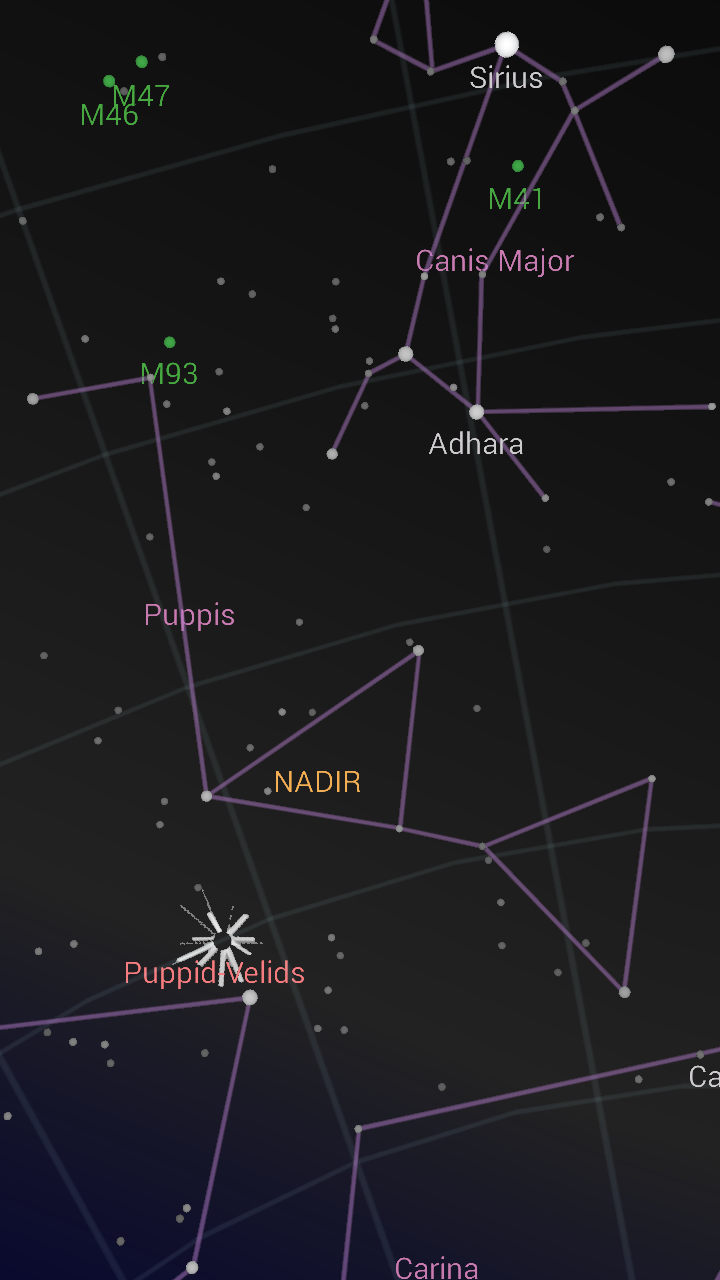
The constellation pictured is known as Canis Major. It has been said that Canis Major follows closely behind Orion. This constellation is located in the second quadrant of the southern hemisphere. The brightest star in Canis Major is known as Sirius, which is also the brightest star in the sky. This constellation is approximately 8.6 light years away. Sirius is also called the "dog star." Sirius is actually a double star. This is also as massive and hotter than the sun itself. Canis Major's second brightest star is known as Adhara. One interesting thing about Canis Major is that there is a star cluster known as M41. There is a total of seven stars within Canis Major. The Canis Major Dwarf Galaxy is an irregular galaxy, roughly elliptical in shape, that is believed to be the nearest neighboring galaxy in the solar system.  This constellation also contains a lot of red giants. These were first discovered in 2003.
http://www.constellation-guide.com/constellation-list/canis-major-constellation/

Monday, December 7, 2015


The constellation that is pictured is Piscis Austrinus. Piscis is located in the southern hemisphere. In Latin Piscis means "the southern fish." Piscis is the first discovered by the second century astronomer Ptolemy. The constellation is relatively faint, but this constellation has a very bright star. The brightest star in the constellation is called Fomalhaut. This star is also one of the brightest stars in the sky. In the late sixteenth century, a Dutch astronomer Petrus Plancius divided some of the stars to create a new constellation called, Grus. Piscis contains three stars and confirmed planets as well. Piscis is usually depicted as a great fish swallowing the water that is flowing from the jar held by, Aquarius. In ancient Egypt, the constellation is associated with the fish that saved goddess Isis, 
http://www.ianridpath.com/startales/piscisaustrinus.htm
 http://www.topastronomer.com/StarCharts/Constellations/Piscis-Austrinus.php    

Sunday, December 6, 2015


The constellation pictured is Cetus. This constellation is located in the northern hemisphere. This constellation was named after the Cetus, the sea monster from the Greek myth about Andromeda. The constellation Cetus is located in the region of the sky called the Water. Cetus contains the barred spiral galaxy Messier 77 and contains several well-known stars. The stars contained in Cetus: Deneb Kaitos, Menkar, Tau Ceti, and Mira. Cetus is the fourth largest constellation is the sky. Cetus lies in the first quadrant of the southern hemisphere. Cetus has fourteen known stars and contains one Messier object. There are three meteor showers associated with Cetus: the October Cetids, the Eta Cetids, and the Omicron Cetids. 
http://www.constellation-guide.com/constellation-list/cetus-constellation/
http://www.ianridpath.com/startales/cetus.htm

Friday, December 4, 2015


The constellation pictured is called Capricornus. This constellation is located in the south hemisphere. Capricornus represents the mixture of a fish and goat and the name actually means "goat horn" in Latin. This is one of the zodiac constellations that was identified by the Greek astronomer Ptolemy in the second century. Capricornus is one of the fainter constellations. Capricornus contains two stars with known planets. It is located very close to the constellation Aquarius. Capricornus contains three bright stars: alpha-2 Capricorni, beta Capricorni, and omega Capricorni. These three stars form a triangle making it easy to find. The constellation originates from the cultures of Sumeria. 
http://earthsky.org/constellations/capricornus-heres-your-constellation 

Thursday, December 3, 2015

The nebula pictured is known as the Dumbbell Nebula. The Dumbbell Nebula can be called Apple Core Nebula. The Dumbbell Nebula is a planet nebula in the constellation Vulpecula, The Little Fox. This nebula is the second brightest nebula discovered. This nebula is approximately 1360 light years away. This object was the first planet nebula discovered. The Dumbbell Nebula was first discovered by Charles Messier in 1764. The overall structure of the nebula is said to be prolate spheroid. This nebula is most easily viewed along the equator. Many nebulas contained knots. Patterns of dark and bright knots mark the central region of the nebula. Knots appear is varied in the shapes of their objects. There is a central star within the Dumbbell Nebula, which is known as a white dwarf. 
http://messier.seds.org/m/m027.html
http://www.messier-objects.com/messier-27-dumbbell-nebula/ 

Wednesday, December 2, 2015

The star pictured is called Regulus, which is the brightest star in the constellation Leo the Lion. The star at its brightest magnitude shines a bright blueish color. Regulus can be found towards the bottom of the star pattern within the constellation Leo, called the The Sickle. Regulus is centered towards the middle of this pattern and has been called the Heart of the Lion. Regulus is located on the ecliptic, which means that is follows the pattern of the moon, sun, and planet, so it can be seem around the world. Regulus is approximately 77 light-year away. Regulus rotates and spins rapidly. Regulus completes a single rotation within 15 hours, If you observe Regulus it is actually composed of 2 different stars, Altair and Achernar. 
http://earthsky.org/brightest-stars/best-regulus-the-heart-of-the-lion
http://www.space.com/22890-regulus.html

Tuesday, December 1, 2015


This constellation pictured is known as Cephus. Cephus "the King" is not a very well-known constellation other than the fact that is contains a well-known star Alderamin. Alderamin is also called Alpha Cephei. This star is the brightest in the constellation Cephus. One very interesting thing about this star is that is rotates very rapidly on its axis. Alderamin is a white star, it is considered a Class A star, which is now evolving off of the main sequence into a supergiant. Researchers believe that this star is on its way to becoming a red giant because of its low hydrogen supply. According to scientists this star shines 18x brighter than the Sun. This star rotates so rapidly that it goes through one revolution in less than 12 hours. Cephus lies very close to the north pole, so the star Alderamin is considered a pole star. This constellation is home to the famous red supergiant known as Garnet Star, Cephus is the 27th constellation to be discovered by the second century astronomer Ptolemy. 
http://www.constellation-guide.com/constellation-list/cepheus-constellation/


Monday, November 30, 2015

The phase of the moon that is pictured is the waning gibbous. This phase of the moon appears two to three days after a full moon. The waning gibbous is visible in the early morning hours. The waning of the moon actually means "shrinking" of the moon. The waning phase repeats every 29 days, which is a synodic month. The waning gibbous is directly between the new moon phase and the first quarter phase. The waning gibbous is the direct opposite of the waxing gibbous. It has been said that when the moon is in this phase that the moon represents the Goddess in her Crone Aspect. The period of waning lasts for 14 days. 
http://earthsky.org/moon-phases/waning-gibbous 

Sunday, November 29, 2015


The constellation pictured in known as Gemini. Gemini is Latin for "twins." Gemini is one of the few constellations that actually looks like the meaning. Gemini is one of the 48 constellations described by the second century astronomer Ptolemy. The constellation is named after the twins Castor and Pollux in Greek mythology. The stars Castor and Pollux are the two brightest stars in the constellation. Another well-known star in the constellation is called Mekbuda, which is a super giant star with a radius 220,000 times the size of the Sun. Gemini also includes Messier object M35, which is part of set of astrominical objects first discovered in 1777 by French astronomer Charles Messier. Gemini is the 30th largest constellation. It is found in the second quadrant in the northern hemisphere. There are two meteor showers associated with this constellation: the Geminids and the Rho Geminids. 
http://www.constellation-guide.com/constellation-list/gemini-constellation/
https://stardate.org/nightsky/constellations/gemini

Saturday, November 28, 2015

The planet pictured is Venus. On this date, Venus is at its brightest point in the sky. Venus is the second planet away from the sun. Venus is named after the Roman goddess of beauty and love. In ancient times, Venus was once thought to be the morning and evening star. Venus and Earth are very similar in size, composition, and gravity. Venus is the hottest planet. Venus' atmosphere is primarily carbon dioxide with clouds on sulfuric acid. The rays from the sun leaves no trace of water on Venus' surface, but the rays have left the surface of Venus in a molten-like state. Venus is very mountainous and made up of six different regions. Venus rotates on an opposite way of most planets. It takes Venus around 243 days to rotate on its axis. 
http://solarsystem.nasa.gov/planets/venus    

Friday, November 27, 2015


The constellation pictured is known as Eridanus. This constellation is located in the northern hemisphere. Eridanus represents a river, that is why it has no distinct shape. The constellation's name is the Ancient Greek name for the river Po in Italy. The constellation Eridanus is associated with the myth of Phaeton and is depicted as a river because it is the water flowing from the constellation Aquarius. Eridanus was first cataloged by the second century astronomer Ptolemy. This constellation contains a well-known star, Achernar. Eridanus also contains the Eridanus galaxies and the Witch Head nebula. This constellation the sixth largest constellation in the sky and is located in the southern hemisphere. This constellation contains a total of stars. Eridanus contains one of the largest supervoids ever discovered.
http://www.constellation-guide.com/constellation-list/eridanus-constellation/


Thursday, November 26, 2015


The constellation pictured is known as Libra. This constellation is called the Scale, which symbolizes divine justice, harmony, and balance. In winter, this constellation can be found in the southern hemisphere. The two brightest stars in the constellation are known as Spica and Antares. The sun passes in front of the constellation from about October 30-November 24. In ancient Babylonian's time apparently associated this constellation with balances and scales. Libra is the 29th largest constellation. The scales in the constellation are held by the Greek goddess of justice Dike. Libra contains three known stars with planets and does not have any Messier objects. There is one meteor shower associated with Libra, May Librids.
http://earthsky.org/constellations/libra-heres-your-constellation

Wednesday, November 25, 2015


The constellation pictured is called Aquila. Aquila is called the Eagle. The brightest star in Aquila is Altair, "the Eagle," a white star that is about 17 light years away from the Earth. This star is the southern most point of the Summer Triangle. Altair is also the 12th brightest star in the sky.  Aquila is located fourth quadrant in the northern hemisphere near the equator. This constellation represents the eagle of the Roman god Jupiter in mythology. The constellation was first discovered in by the second century astronomer Ptolemy. Aquila is the 22nd largest star constellation in the sky. Aquila contains seven stars with known planets. There are two meteor showers associated with Aquila: the June Aquilids and the Epsilon Aquilids.
http://www.constellation-guide.com/constellation-list/aquila-constellation/

Tuesday, November 24, 2015


The constellation pictured is called Lepus. Lepus represents a hare this being hunted by the Orion and chased by the nearby dogs, Canis Major and Minor. this constellation lies just below celestial equator in the southern hemisphere.  Lepus was one of the constellations discovered by the second century astronomer Ptolemy. This constellation is the 51st largest and is best seen in February, but can be seen anytime during the winter time. M79, a globular star cluster, is the only Messier object located in this constellation. Lepus contains one star with a known planet. Lepus contains a total of 8 stars. No meteor showers are associated with Lepus. The brightest star in Lepus is Arneb. 
 http://www.constellation-guide.com/constellation-list/lepus-constellation/ 
http://www.topastronomer.com/StarCharts/Constellations/Lepus.php


Saturday, November 21, 2015

The moon is pictured in the first quarter phase. When the moon is in the first quarter the right side of the moon is lit up. This phase is between the waxing crescent and waxing gibbous phase. The first quarter moon rises at noon and sets around midnight the next day. The moon is overhead at noon. The reason that it's not called the first half is because the moon is only one quarter of its way around the orbit of the earth. The first quarter moon comes about a week after the new moon from the previous week. The best way to describe this is that the moon is 90 degrees angle with respect to the earth and sun. The moon goes through a complete phase cycle in about a month, The lunation cycle takes approximately 29 days to complete. 
http://earthsky.org/moon-phases/first-quarter

Thursday, November 19, 2015

This constellation pictured is known as Hercules Cluster or M13. This cluster is known to be the best cluster in the northern hemisphere, Hercules Cluster is found in a star pattern called the Keystone, which is located between the two brightest stars Vega and Arcturus. Globular star clusters area huge globe-shaped section filled with hundreds-thousands of stars. Globular clusters are tightly held together by gravity unlike open clusters. Hercules Cluster is best seen with a telescope. Hercules Cluster was named after the famous comet hunter, Charles Messier. Charles first discovered this constellation in 1764. Of the 250 globular clusters in the northern hemisphere, Hercules Cluster is the biggest by far. This cluster is made of gas and dust rich, star-forming spiral galaxies. A blue tint is usually given off by this constellation. 
http://earthsky.org/clusters-nebulae-galaxies/m13-finest-globular-cluster-in-northern-skies

Tuesday, November 17, 2015

This constellation pictured here is known as Orion Nebula. In order to find Orion Nebula. you must first find the constellation Orion. In the northern hemisphere during the winter months is when this is seen the easiest. Orion Nebula is easily visible due the three stars that make up Orion's belt. Midway down Orion's Sword you can then find Orion Nebula. Nebulae are described as clouds of interstellar gases and dust. Nebulae are very difficult to see with the naked eye, so it is necessary to use binoculars to find them. Orion Nebula, however, is different from the Nebula because it is visible to the naked eye. Orion Nebula is approximately 1,300 light years away from the Earth. In 2012, astronomers found within Orion Nebula a cluster of stars. They believe that at the center of this cluster contains a black hole. Orion Nebula has four primary stars. Pictures of Orion Nebula normally have a greenish tint with some red and violet colors. 
http://earthsky.org/clusters-nebulae-galaxies/orion-nebula-jewel-in-orions-sword